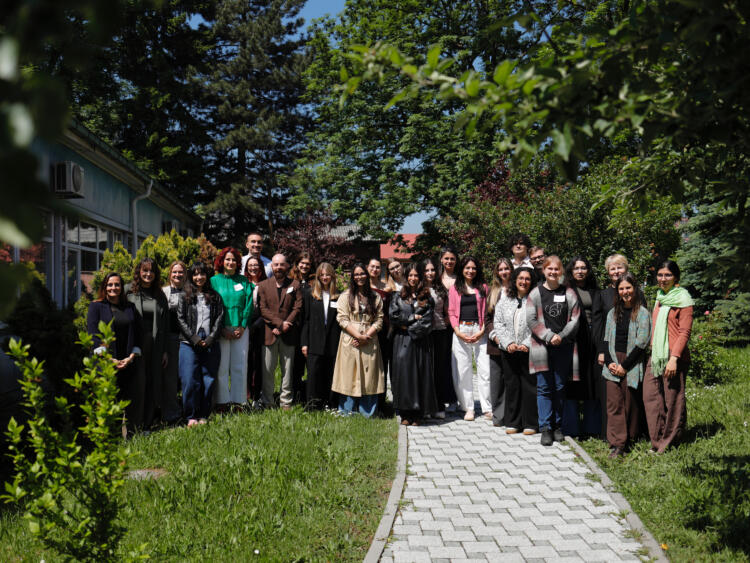
The first edition of the Interdisciplinary Summer School on the Rights of Children and Future Generations took place from 18 to 22 May 2026 in Sarajevo. It brought together 23 young participants from across Europe and 10 international professors and experts for an intensive week of learning, discussion and collaboration on some of the key issues affecting children and future generations today.
As the first generation of participants within a broader programme cycle supported by the Global Campus of Human Rights and Right Livelihood, the Summer School marked an important milestone in strengthening interdisciplinary education and youth engagement on children’s rights and intergenerational justice.
Throughout the week, participants engaged in lectures, workshops, group discussions and collaborative activities addressing topics such as children’s rights, climate and intergenerational justice, child participation, migration, social inclusion and the impact of emerging technologies on children and young people. The programme created a dynamic space for interdisciplinary exchange, critical reflection and dialogue between participants, academics and practitioners from different backgrounds and countries.
The Summer School brought together distinguished professors, researchers and practitioners from across Europe, offering participants the opportunity to engage directly with experts working on children’s rights in academic, institutional and advocacy settings. Alongside the academic programme, participants also took part in a range of experiential learning activities across Sarajevo, connecting discussions on rights and justice with local histories and lived experiences.
Among the highlights of the programme were a visit to the War Childhood Museum, guided tours of Sarajevo, and collaborative group presentations reflecting on the themes and discussions developed throughout the week. Participants also had the opportunity to engage with representatives of UNICEF, who joined the programme at the Center for Interdisciplinary Studies of the University of Sarajevo to deliver an educational session on children’s rights work, advocacy and current challenges affecting children and young people.
More than an academic programme, the Summer School created a vibrant international community of young people committed to advancing children’s rights and building more inclusive and sustainable futures. Through shared learning, exchange of experiences and collaborative reflection, participants developed new connections and perspectives that will continue beyond the programme itself.
The successful completion of the first Interdisciplinary Summer School on the Rights of Children and Future Generations represents an important step in developing new spaces for interdisciplinary education, youth participation and international cooperation, reaffirming Sarajevo as a place of dialogue, learning and collective action on children’s rights and future generations.
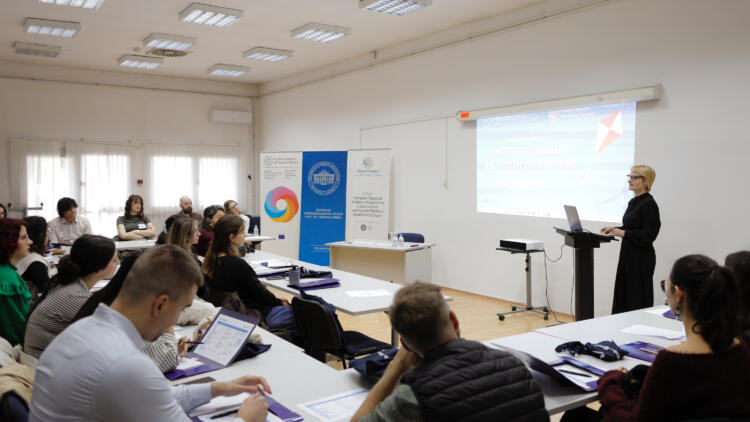
As the director of the Summer School, Professor Sanela Bašić from the University of Sarajevo shared “We gather at a moment marked simultaneously by uncertainty and possibility. Across the world, and particularly in Southeast Europe, children and young people are growing up in societies shaped by profound social, political, technological, economic, and environmental transformations. Our region continues to grapple with the long-term consequences of conflict, democratic fragility, social fragmentation, inequality, poverty, migration, and institutional instability, while global challenges such as climate change, digital transformation, and growing social insecurity further intensify these realities.
In such a context, the rights of children are not only a legal or policy issue; they are foundational to the future of democratic, just, and sustainable societies. The way we protect, include, educate, and listen to children today profoundly shapes the wellbeing, resilience, and social cohesion of future generations tomorrow. Yet despite important progress in adopting international standards and legal frameworks, many children across Southeast Europe continue to experience exclusion, violence, educational inequality, limited participation, and uncertainty regarding their futures. Discussions on intergenerational justice and the rights of future generations also remain insufficiently present within public policy and higher education in our region. This summer school was created precisely in response to these challenges and gaps.”